
Try it right here
This loads the live project from its own domain, exactly as a visitor would see it.
What it does
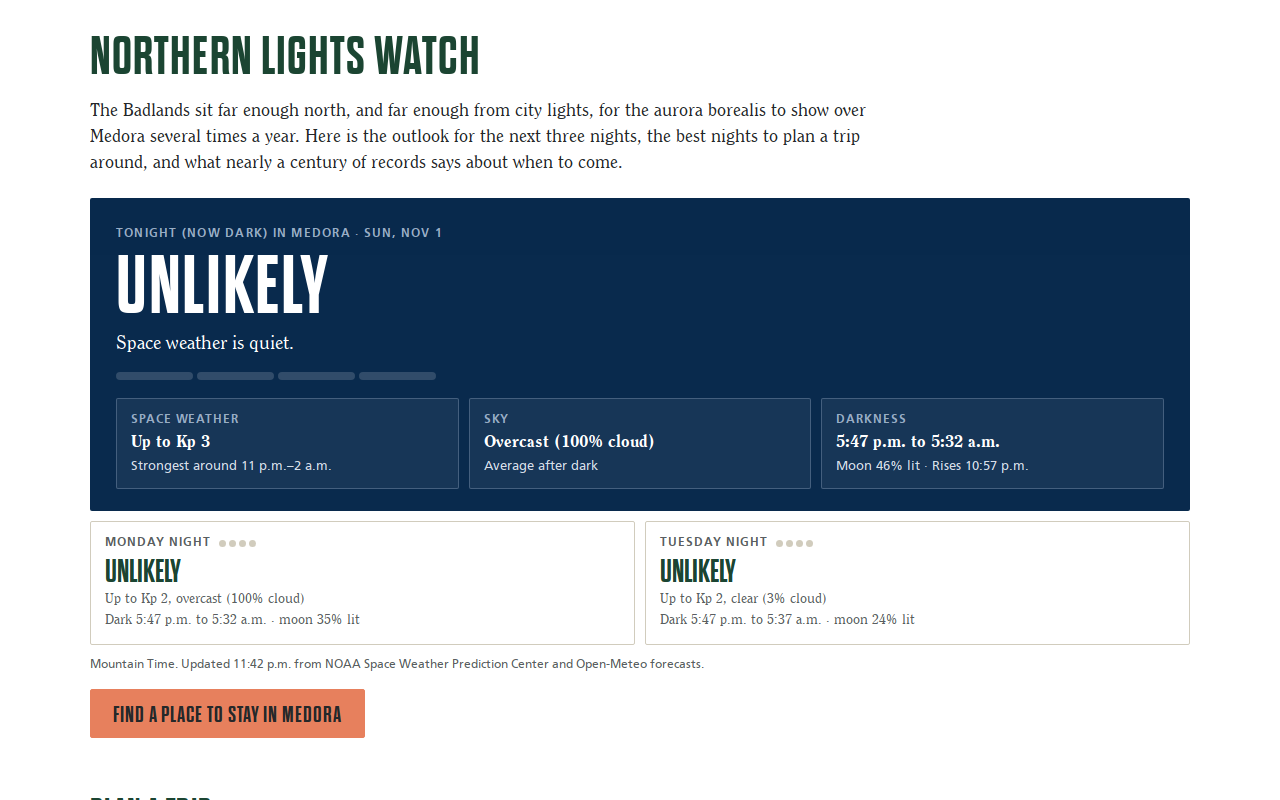
An embeddable northern lights outlook for one place. For tonight and the next two nights it combines NOAA's space-weather forecast with cloud cover and moonlight after dark and gives a plain rating, from "unlikely" to "strong." When it is dark and activity is up, it reads NOAA's 30-minute aurora model for the sky to the north and says so.
The trip planner scores every night of the coming year from what the record says: seasonal odds since 1940 of aurora-strength activity under a mostly clear sky, where the solar cycle stands, moonlight, and NOAA's 45-day outlook where it reaches. It lists the five best three-night stretches and links straight to lodging on those dates.
What it can do
- Three-night outlook from NOAA Kp forecast, cloud cover, darkness, and moon
- "Active now" note from NOAA's OVATION model when warranted
- Year-ahead planner ranking every night, with the five best three-night windows
- Nightly record since 1932 built from GFZ Kp and ERA5 cloud cover
- Compact, planner-only, and full views for different pages
- Lodging links that pass check-in date and nights to a lodging finder
- Single-file, dependency-free, shadow-DOM widget
Make it your own
Start by forking the repository into your own organization. Everything below assumes you are working in your fork, not this one.
- Fork the repo and set your latitude, longitude, and time zone in
collector/history.pyanddocs/aurora.js. - Adjust the Kp rating table for your magnetic latitude. Farther south needs higher Kp for the same rating.
- Run
python collector/history.pyonce for the full rebuild (about a minute), then let the weekly workflow run--recent. - Point
data-ctaat your own lodging page, or turn it off. - Enable Pages from
main, folder/docs, editdocs/CNAME, and give workflows read and write permission.
Stuck on a step? Open an issue on the repository. Questions from people adapting these for their own institution are the most useful feedback we get.